Land register extract from an address: how to find the cadastral number on the map
You have the property's address, but ANCPI asks for the cadastral number or land register number, and the listing does not give either. The good news: you can get from the address to the cadastral number in a few minutes, for free, directly on the map. This guide gives you the exact steps, what to do if the plot does not appear and what to read in the extract before paying any deposit.
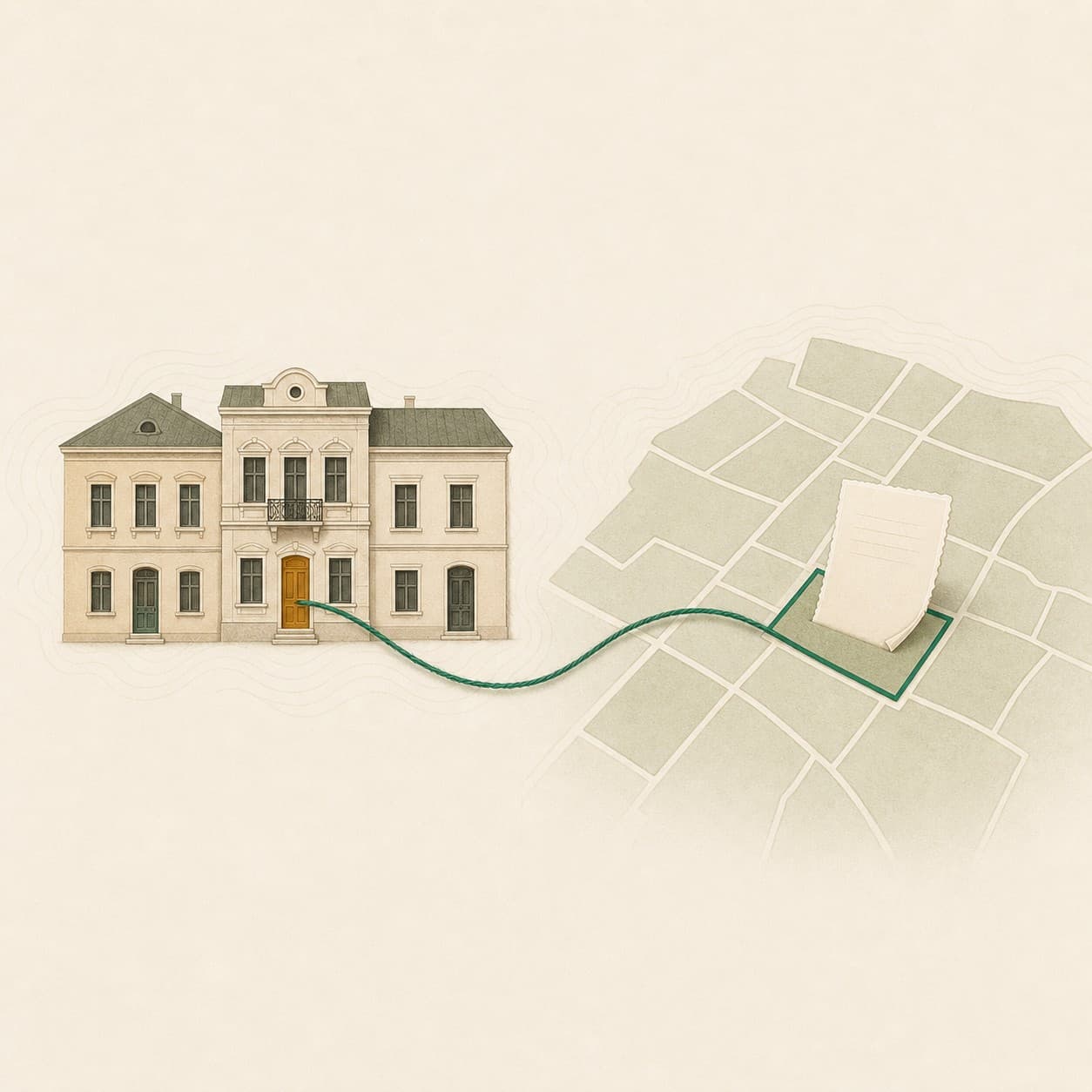
- A land register extract is issued using the cadastral number or land register number. ANCPI does not search by postal address, and websites promising an “extract by address” still rely on these numbers.
- You can find the cadastral number from the address for free: navigate to the address on the Verifi map, zoom in until the plots appear and tap the plot. The number, locality and area appear immediately.
- As an owner, you do not need an intermediary: since June 2025, you can download extracts for your own properties free of charge from the ANCPI platform. Buyers and other third parties pay a fee.
- Before paying a deposit, Part III of the extract matters: mortgages, prohibitions, litigation and promises registered for other buyers (mandatory for developers since 8 March 2026).
What you can decide from the address
The address in the listing is a starting point, not the property's identification. The extract is requested using the cadastral number, which must be visually confirmed before ordering.
Verifi helps you prepare the right questions and identify important warning signs. For complex legal situations, clarify the decision to sign with your notary or lawyer.
The address leads to the plot, and the plot to the cadastral number
ANCPI does not search by postal address, but registered plots are publicly outlined on the map. The correct route has three steps, and the first is free.
The address in the listing is no guarantee: check on the map that the plot you tapped is the one being negotiated.
- cadastral number or land register number - the key ANCPI uses to identify the property when issuing an extract; the postal address is not a search criterion (ANCPI's land register extract issuing procedure)
- 20 lei - ANCPI's official fee for an informational land register extract requested online, using your own account and with property identification your responsibility (ANCPI fees)
- June 2025 - since then, owners have been able to download informational extracts for their own properties free of charge online from the ANCPI platform (ANCPI)
- 8 Mar. 2026 - from this date, developers' sale promises must be recorded in the land register and become visible in Part III of the extract (Legea 207/2025)
1. Why you cannot request an extract directly by address
In ANCPI records, a property is not “strada X nr. 5”, but an identifier: the cadastral number (or topographic number for older land registers) and the land register number, both linked to an administrative-territorial unit. You enter these numbers when applying for an extract, whether at the counter or online. The postal address appears in the extract as a description, but it is not a searchable field.
This is the familiar obstacle for buyers: the listing gives you an address (sometimes just “area X”), the seller is in no hurry to send the documents, and you want to check the property before proceeding. Websites selling a “land register extract by address” have no magic wand: they still look for the cadastral number, only manually and at your expense. If they identify it incorrectly, you receive an extract for a different property.
The solution is not to abandon the checks, but to turn the address into a cadastral number. You do not need documents from the seller for this: cadastral plots are shown publicly on the map and can be found visually.
2. Find the cadastral number on the map, starting from the address
The Verifi map (verifi.ro/harta) displays the boundaries of cadastral plots in Romania over satellite imagery. You do not need an account and pay nothing to identify the plot:
On narrow plots, your finger may also touch the neighbouring plot: when a tap finds several nearby plots, they appear as options below the plot card, so you can switch with one tap without aiming again. Check the boundary shape, area and neighbours against what you know about the property before ordering.
The plots and cadastral numbers displayed on the map come from ANCPI's public services. The land register extract remains the official document: the map helps you request it for the correct property.
3. What to do if the plot does not appear on the map
Not all properties in Romania have cadastral registration: systematic cadastral registration is still under way, and in many localities only some plots are registered electronically. If the map shows no boundary at your address, it is usually not a display error: the property genuinely has no cadastral number or electronic land register. In order of effort:
A property without a land register cannot be sold before a notary until it is registered. If the seller promises that “it will be sorted quickly”, require registration as a condition in the preliminary contract, not a verbal promise; we explain how to link payments to such conditions properly in the guide to protecting your deposit.
4. Owners do not pay. Buyers do
A distinction few websites explain directly: since June 2025, owners can download land register extracts for information for their own properties online, free of charge, from the ANCPI platform. If you own the property and need an extract for it, you do not need Verifi or any other intermediary: create an account on the ANCPI platform and download it there at no cost.
However, free access applies only to your own properties. A buyer who wants to check a property BEFORE buying it, precisely when checks matter most, remains a third party and pays the fee: 20 lei at ANCPI, using their own account and identifying the property themselves, or 60 RON through Verifi, with the plot identified visually on the map and the document delivered by email. Anyone can request an extract for information for any property: the land register is public, and checking before purchase is exactly what it is for.
5. What to read in the extract before paying the deposit
The land register extract has three parts, and all three matter to the purchase decision:
For homes bought from developers, promises to sell must be registered in the land register from 8 March 2026: a flat already promised to someone else appears in Part III, provided someone reads the extract before paying. We explain what this rule covers (and does not cover) in the guide to the Nordis Law, and how to read each part of the extract, line by line, in the complete guide to the land register extract.
This guide is for information only and does not replace legal advice. For large sums or unusual situations, discuss the extract with the notary or a lawyer before transferring money.
Frequently asked questions
Can I obtain a land register extract with only the property's address?
Not directly. ANCPI identifies the property by cadastral number or land register number, not postal address. But you can find the cadastral number from the address for free: navigate to the address on the Verifi map, tap the plot and its cadastral number appears immediately; order the extract from there.
How do I find the cadastral number if I only have the address?
On verifi.ro/harta: move the map over the property (address or locality search, free navigation or GPS location), zoom until plot outlines appear and tap the plot. The displayed card shows the cadastral number, locality and area, free of charge and without an account.
How much does a land register extract cost?
An informational extract requested online directly from ANCPI costs 20 lei, but you must create a platform account and identify the property yourself by cadastral or land register number. Through Verifi, the extract costs 60 RON and includes map-based plot identification and email delivery.
How long does it take to receive the extract?
An extract ordered through Verifi is attached to an email immediately after ANCPI issues it: usually within a few minutes, no more than 24 hours.
Is the land register extract free for the owner?
Yes. Since June 2025, owners can download informational land register extracts for their own properties free of charge online from the ANCPI platform. This applies only to their own properties: buyers and other third parties pay the normal fee.
What should I do if the plot does not appear on the map?
Most likely, the property has no cadastral registration and electronic land register entry; systematic registration is still underway. If an older deed gives the land register number, you can order the extract directly with it, without a cadastral number. Otherwise, identification starts at the local council (agricultural register) and continues at the county OCPI.