Air quality, noise and waste sites: environmental risks near a property
A home may look good in photographs yet be in a difficult setting: a busy main road, heavy traffic, recurring odours, industrial sites or waste sites nearby. Before paying a deposit, it is worth checking the property's surroundings as carefully as its documents and price.
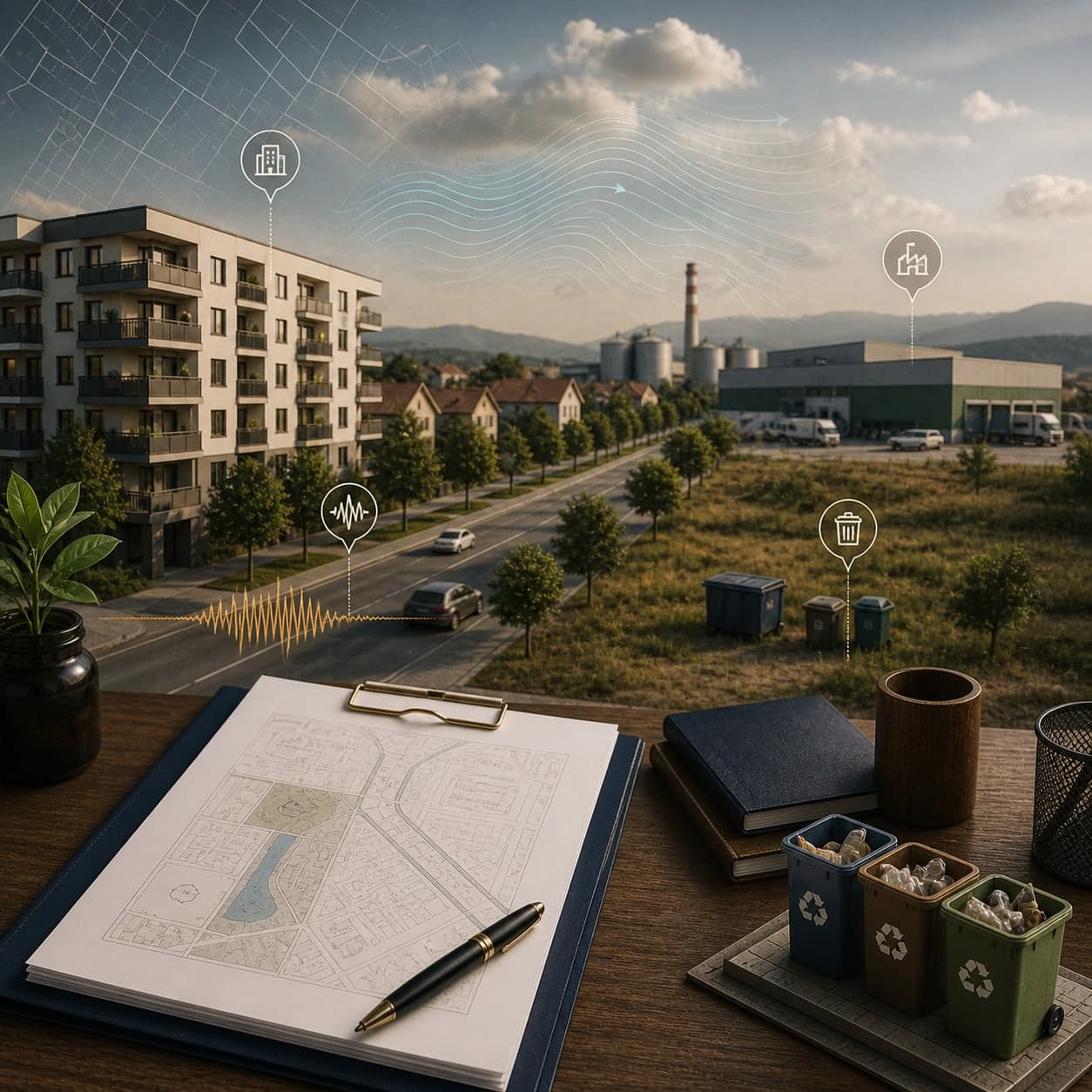
Environmental risks around a property are not always visible in the listing. Traffic, industrial activities, construction sites, odours and waste sites can change how comfortable it really is to live there.
Air quality and noise should be interpreted as contextual screening, not a medical conclusion, environmental audit or technical assessment.
A waste site near a house, an industrial site or a busy road does not automatically prevent a transaction, but calls for further questions and checks.
Verifi Complet is the appropriate route when you need to put environmental context alongside property data, the surroundings and other property-check indicators.
What to check around the property
The environmental context does not always appear in the documents, but may affect living conditions, value and the buying decision.
Verifi helps you prepare the right questions and identify important warning signs. For complex legal situations, clarify the decision to sign with your notary or lawyer.
The surroundings can radically change the experience of living there
The environment does not always appear in the transaction documents, but you experience it every day after buying.
Viewings at different times can quickly confirm what public sources show.
Why environmental risks can change a purchase
When you ask what to check when buying a house, the first answers are usually the land register, the owner, permits and the building's condition. But living there extends beyond the walls: the air you breathe, daytime and night-time noise, odours, heavy traffic and nearby activities can influence comfort, costs and resale value.
Environmental property risks are not limited to large factories or rare accidents. Sometimes the issue is more ordinary: a street used as a through route, lorry parking, prolonged construction work, a sorting facility, a logistics site, a dusty area or a waste site causing seasonal nuisance.
Environmental indicators worth checking before an offer
Good checks start with the map and continue on site. Do not rely solely on the viewing time. Some problems appear in the morning, evening, at weekends, in summer, after rain or when the wind blows from a particular direction.
Busy roads, heavy traffic, stoves, boilers, construction sites, dust, industrial activities or recurring odours.
Main roads, railways, trams, airports, logistics warehouses, restaurants, outdoor dining areas, schools or busy car parks.
Landfills, transfer stations, sorting and recycling facilities, collection sites, land used informally for dumping.
Mixed uses, industrial premises, workshops, garages, petrol stations or areas with planned construction work.
For initial screening, the question is not whether the area is good or bad, but whether there are indicators that could affect the property's actual use: a bedroom facing a main road, a balcony facing a loading area, a garden beside a through road or a low-floor flat in an area with dust and constant traffic.
Air quality: what you can assess without an environmental audit
Air quality is difficult to reduce to a single impression at a viewing. It can vary with the time, season, weather, wind direction and nearby activities. As a prospective buyer, however, you can look for contextual indicators: sources of traffic, dust, smoke, odours, construction work, storage or burning nearby.
When considering pollution near a flat, check the exact position of windows and air intakes relative to the street. A flat facing an internal courtyard may have a different nuisance profile from one with a bedroom directly facing a main road. For a house, the yard, play area, terrace, garden and distance from roads or dust-generating activities matter.
- Return to the area at different times, including morning and evening.
- Observe dust on windowsills, cars, vegetation and façades.
- Ask neighbours about recurring odours or seasonal episodes.
- Check for construction sites, unpaved roads, sites or activities that may generate dust.
Verifi Complet helps you treat the area as part of the checks: surroundings, risk indicators and useful questions for buying.
Traffic noise near a home: why a lunchtime viewing is not enough
Noise is one of the most underestimated problems when buying. During a viewing, windows may be closed, traffic may be light and the agent may choose a favourable time. Living there means experiencing the actual pattern: traffic peaks, motorcycles, trams, lorries, horns, refuse collection, deliveries, outdoor dining or commercial activities.
Traffic noise near a home is assessed differently depending on the property type. For a flat, the floor, bedroom orientation, windows, ventilation and communal spaces matter. For a house, the distance from the road, fence, garden, bedrooms, terrace and actual ability to use outdoor space matter.
Listen from the bedroom. Close and open the window, then notice the difference without music or conversation in the background.
Return at busy times. Morning, evening and weekends may have a different soundscape from the initial viewing.
Look at traffic flows, not just distance. An apparently minor road may be a shortcut for heavy traffic or deliveries.
A waste site near a house: what it means as a risk indicator
A waste site near a house or plot of land may raise questions about odours, heavy traffic, dust, rainwater, insects, the area's image and resale potential. The same may apply to sorting, transfer and recycling facilities, collection sites or land where materials are dumped informally.
Not every neighbouring site of this kind has the same impact. Distance, terrain, wind, lorry access, operating hours, the area's history and the type of activity matter. As a buyer, your aim is to understand whether the indicator could affect comfort, use of the garden, opening windows or long-term value.
What to check when buying a house or flat in a sensitive area
When there are air quality, noise or waste indicators, treat the viewing as an inspection of the context, not just a tour of the finishes. Take notes on the time, weather, window orientation, traffic routes and what can be seen or sensed from each important room.
Questions for the seller
- Have there been complaints about noise, odours or dust?
- Why is the property being sold, and how long has it actually been lived in?
- Which rooms are most exposed to traffic or neighbouring activities?
- Has there been recent investment in windows, ventilation or insulation?
Questions for neighbours
- When is the area noisiest?
- Are odours or smoke noticeable at certain times?
- Are there lorry routes, night-time deliveries or announced construction works?
- Are the problems occasional or part of the area's routine?
Ask for time if the answers are vague. A sound property decision is not based on a single short viewing on a favourable day.
How to use Verifi Complet for environmental context
Verifi Complet is appropriate when the surrounding environment may influence the decision: pollution near a flat, traffic noise near a home, a waste site near a house, industrial activities, mixed-use surroundings or land where your plans depend on the area's comfort and image.
The report helps you put area-level indicators alongside the other checks: property identification, surroundings, environmental property risks and questions to pursue. The aim is to make a decision based on fuller context, not just the listing.
Important: Verifi provides contextual screening, not an environmental audit, authorised acoustic measurements, medical advice or engineering design. For sensitive situations, confirm conclusions with specialists, current documents and on-site checks.
Frequently asked questions
Is buying a house near a waste site a problem?
It does not automatically prevent a transaction, but it is an indicator that calls for further questions and checks: odours, heavy traffic, dust, rainwater, insects, the area's image and resale potential. The impact depends on distance, terrain, wind, lorry access, operating hours, the area's history and the type of activity.
How can I assess noise when it was quiet at the viewing?
A lunchtime viewing is not enough: windows may be closed, traffic may be light and the time may have been chosen favourably. Listen from the bedroom with the window closed and open, return at busy times (morning, evening, weekends) and look at traffic flows, not just distance: an apparently minor road may be a shortcut for heavy traffic or deliveries.
How can I check air quality near a flat without measurements?
Look for contextual indicators: sources of traffic, dust, smoke, odours, construction work, storage or burning nearby. Observe dust on windowsills, cars, vegetation and façades, return at different times and ask neighbours about recurring odours or seasonal episodes. For health impacts or authorised measurements, speak to specialists.
What should I ask the seller about the area around the property?
Whether there have been complaints about noise, odours or dust, why the property is being sold and how long it has actually been lived in, which rooms are most exposed to traffic or neighbouring activities, and whether there has been recent investment in windows, ventilation or insulation. Ask for time if the answers are vague.
Does an environmental indicator mean the area is bad?
No. An area-level indicator is not a diagnosis, environmental audit, authorised measurement or medical advice. It is a reason to ask better questions before paying a deposit and check whether it could affect the property's actual use: a bedroom facing a main road, a garden beside a through road or a balcony facing a loading area.
Check the area, not just the flat's front door.
When questions arise about pollution near a flat, traffic noise at a home or a waste site near a house, Verifi Complet provides contextual screening for clearer discussions with the seller, neighbours and relevant specialists.
Check on Verifi