- INFP reported the earthquake on 11 August 2026 at 20:21:16 in the Vrancea seismic zone, Buzău County, 56 km east of Brașov.
- INFP's manual assessment indicates ML 4.3, a depth of 133.2 km and intensity III, classified as weak.
- USGS reports the same event at 17:21:15 UTC, with a magnitude of 4.6 and a depth of approximately 140 km, west of Lunca Jariștei.
- The INFP and USGS values come from separate assessments. We publish them side by side, retaining the unit and source of each value.
- A regional seismic event does not reveal the technical condition of a building in Brașov and cannot replace a technical assessment.
- We do not draw a conclusion about the presence or absence of local damage without an identifiable official statement.
- Data from a single earthquake do not allow predictions about aftershocks or a future earthquake.
What happened
On Tuesday, 11 August, at 20:21, a deep earthquake in the Vrancea seismic zone, Buzău, was also felt in Brașov. INFP located the event 56 km east of the city and assigned it a local magnitude of 4.3 and intensity III.
USGS publishes a magnitude of 4.6 and a similar depth of around 140 km for the same event. The difference is not resolved by choosing the higher figure for the headline: the networks use their own assessments, and accurate reporting keeps each value alongside the institution that published it.
For a buyer, the earthquake does not produce a new list of safe or unsafe buildings. It does, however, raise a very specific question: what do the documents tell us about the property in which money is about to be tied up?
What to check before paying a deposit
- Search for the property using its exact address, and also check the street numbers or historical names under which it might appear in the lists.
- Ask for the year of construction, a technical assessment or any assessments available, the formal records and documents concerning seismic strengthening or structural alterations.
- Do not interpret absence from a public list as proof that the block has been assessed and declared safe.
- Distinguish refurbishment of the flat or façade from the condition of the load-bearing structure. The appearance of the finishes does not answer the seismic safety question.
- If the documents are missing, contradictory or indicate alterations, seek the opinion of a certified technical expert before paying a deposit.
Why the year of construction is not a verdict
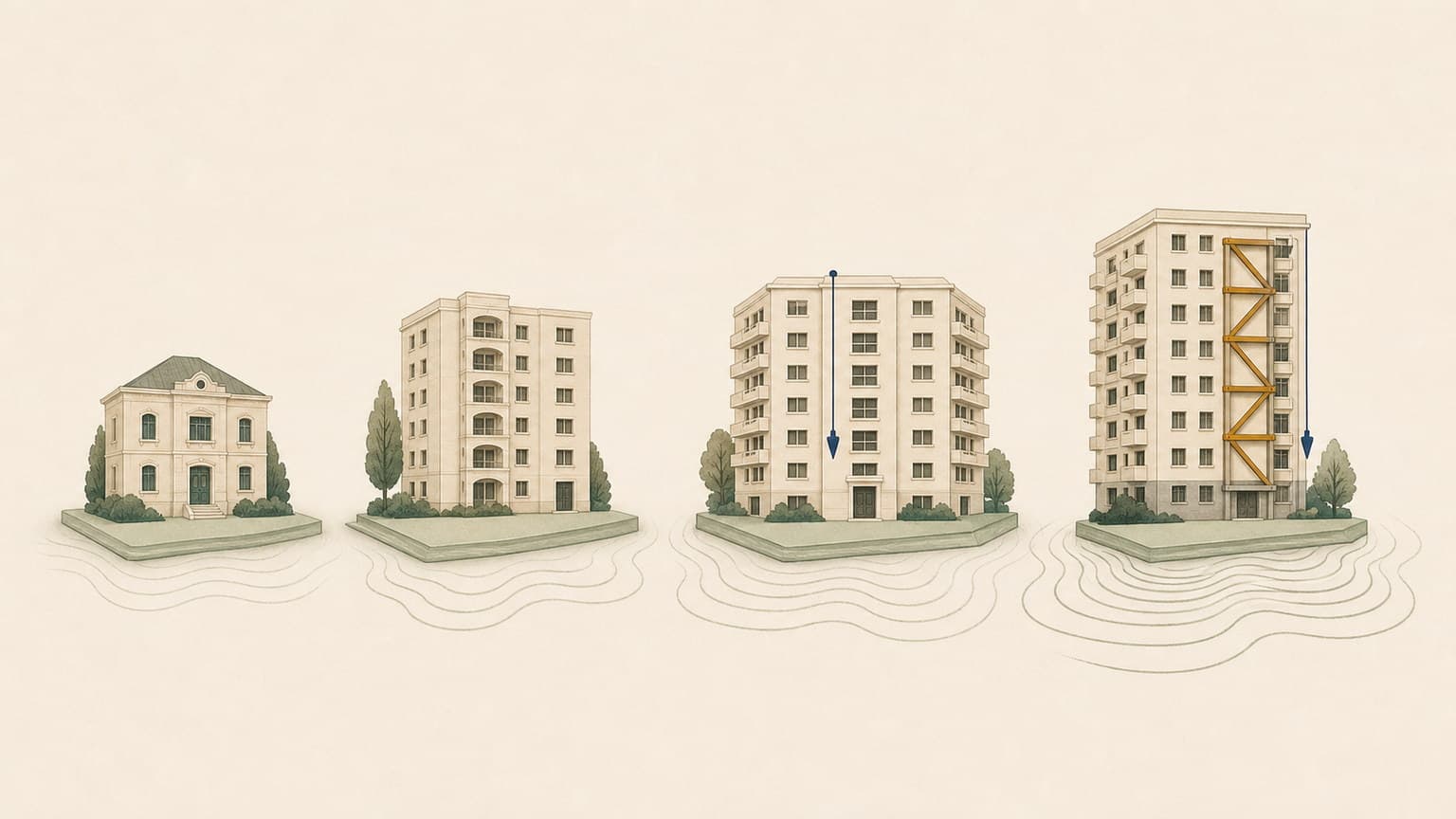
The year of construction helps explain the standards that applied and the earthquakes the building has experienced, but it does not replace technical documents. Two properties built in the same period may differ in design, construction quality, alterations and maintenance.
Likewise, saying «it has no red disc» does not automatically mean «it is safe». It may mean that the property has not been given that classification, has not been assessed, or is not fully identified in public records. The useful question is what assessment exists and which document proves it.
Where Verifi can help
The Verifi report screens public sources for seismic risk and matches the address with the official information available. It may reveal a warning sign or a gap in the data worth investigating, but it does not replace a technical assessment or automatically declare a building safe or unsafe.
For the buyer, the value lies in the sequence: check the address and documents before paying a deposit, then follow up any technical warning sign with the right specialist, before the decision becomes difficult to reverse.
the manual assessment, ML 4.3 magnitude, depth, intensity and distance from Brașov
02USGSthe international assessment of the same event, magnitude 4.6 and a depth of approximately 140 km
03DSUofficial recommendations on earthquake preparedness and what to do during an earthquake
Check the property, not just the story in the listing.
The Verifi map and report match public warning signs with the address you are interested in. You decide what warrants further investigation.
Open the Verifi map →